
Interview: Tokyo Graffiti and the Street Art Scene in Japan
Yui Tanaka interviews Lord K2
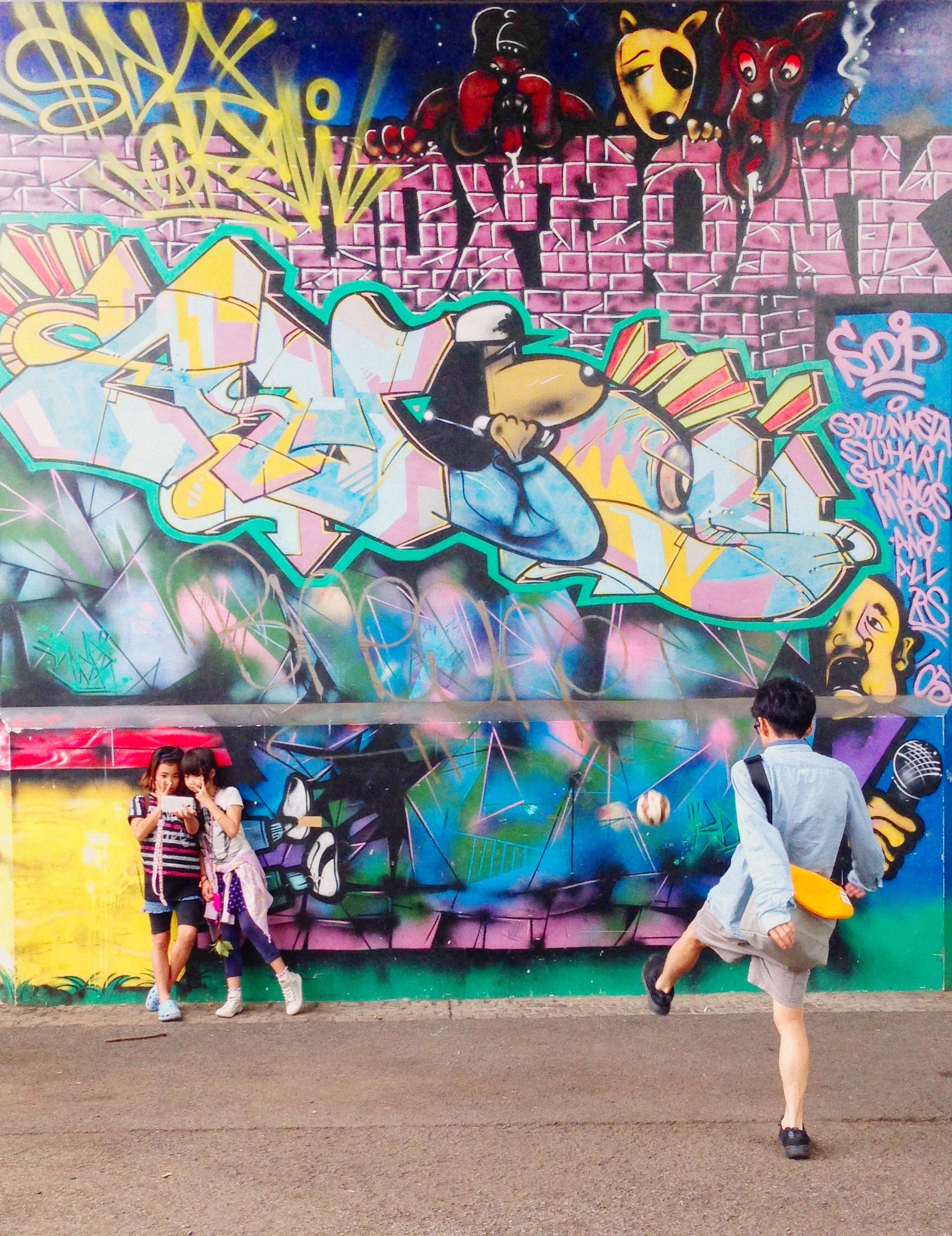
Photographer and artist Lord K2 discusses the making of Tokyo Graffiti, his photo-book documenting Tokyo street art, Tokyo graffiti, and the changing urban landscape of Japan. Drawing on years of exploring the Shibuya and Harajuku street art scenes, and the wider world of Japanese graffiti, he shares his thoughts on the culture, history, and future of street art in Tokyo.
How long have you been living here? What drew you, as an artist, to Tokyo?
I’ve been living in Tokyo for three years. As an artist, I was drawn here to document the sumo wrestling culture in Japan. I previously published a book on sumo, and currently I’m creating artwork inspired by the sport.
What is your relationship to street art in Tokyo?
Having spent a lot of time in South America and NYC—both places with vibrant street art scenes—I noticed that Tokyo has relatively little street art in comparison. My challenge was finding enough pieces to compile a compelling photo-book.
How did you research the history of Tokyo street art for your book, Tokyo Graffiti?
Tokyo’s street art history is barely recorded — and that’s exactly what made Tokyo Graffiti such a unique and urgent project. There was no blueprint, no archive to refer to. In many ways, I felt like I was documenting a ‘golden era’ as it was unfolding in real time.
Rather than relying on books or existing research, I hit the streets — exploring alleyways, underpasses, and hidden spots, searching for street art in Harajuku and Shibuya with a camera in hand. I spoke to local artists, shop owners and skaters, — anyone who had a connection to the scene. But much of what I learned came from observing what the walls were saying.
What are your thoughts on the relationship between street art, tags, and stickers? How do you (as an artist) feel about tagging?
I enjoy observing street art—murals, paste-ups, stickers etc. with artistic integrity. But tagging? While some people see it as a form of self-expression, I often view it as an attempt to gain visibility or recognition, often at the expense of other people's property. It’s a form of vandalism that makes the city uglier for everyone. There’s a difference between contributing to urban culture and just defacing it.
How does street art in Japan differ from London and other cities?
These days, there’s very little street art left in Tokyo. Since I released Tokyo Graffiti, the government has cracked down even harder.
Unlike cities like London, where street art is more accepted and a part of the culture, Tokyo treats it more as vandalism. The average Japanese person is unfamiliar with the street art culture. They may know who Banksy is but that’s about it.
There is a perception that foreigners do the majority of the graffiti in Tokyo. Do you think this is true? If so, why is that? Where does that perception come from?
Street art isn’t really woven into Japanese culture — it’s not ‘a thing’ here in the same way it is in many other countries. There’s a perception that foreigners do most of the graffiti in Tokyo, and to some extent, that’s true. Many international artists are drawn to Tokyo because, it’s such a huge and visually dense city, their work gets seen by thousands to millions of people. That kind of exposure can help them build their profiles and they can therefore sell their works in galleries for higher prices. For many, painting in Tokyo is a form of free — or sometimes paid — advertising, especially with the exposure from Instagram and other social media platforms.
I've noticed that the majority of tags are written with Roman characters rather than kanji or hiragana. Do you know why that is?
The influences stem originally from NYC. Tagging is not a Japanese thing. Tagging in Roman characters often signals alignment with a rebellious, outsider, or global subculture. It distances the artist from traditional or mainstream Japanese aesthetics and aligns them with a more international, underground identity.
What draws you to street art over other mediums?
I find that street art breaks the monotony of everyday urban life. Cities can often feel cold, uniform, and repetitive, but street art disrupts that sameness—it surprises you. I love the idea of open-air museums, where art isn’t confined to institutions or framed behind glass, but lives out in the world where anyone can see it and engage with it.
What differentiates art in public spaces from art in private displays?
Art in public spaces is accessible to everyone, while art in private displays is often curated for specific audiences. Public art interacts with its environment and community, becoming part of daily life, whereas private art exists in controlled settings, separate from the flow of everyday experience.
Street art is often bolder and larger. It is designed to stand out or blend into the environment in unexpected ways. In contrast, art in private displays is usually more polished and protected. Street art is often a preview of the style of art the artist will display in a gallery.
What’s something that most people don’t know about the street art scene in Tokyo?
There isn't really a street art scene in Tokyo—at least not in the way people imagine. Compared to cities such as Bangkok, Taipei, Melbourne, Sao Paulo, or New York, the scene is small and fragmented.
Street art in Tokyo is rarely political. That reflects, in part, Japan's relatively stable society, low crime rates, and a culture that generally values social harmony over public confrontation. As a result, artists tend to focus more on aesthetics, style, and personal identity than on protest or activism.
One of the biggest misconceptions is that Tokyo is a major street art destination. I've sometimes received emails from visitors asking me to give them a guided tour of Tokyo's street art scene. My response is usually that if street art is your primary interest, there are far more vibrant and rewarding cities to explore elsewhere in Asia. What makes Tokyo interesting is not the quantity of street art, but its rarity. Finding it requires patience, persistence, and a willingness to look beyond the obvious.
What do you think is the most important thing for me to know or understand to write about graffiti in Tokyo?
To write about graffiti in Tokyo, one of the most important things to understand is what kind of art appears on the streets, who is making it, and why. You also need to consider how Japan’s strict laws, social conformity, and clean urban environment shape the style and the motivation behind the work.